The HOA and property management industry is heading into 2026 at a critical inflection point. Rising costs, growing regulatory complexity, shifting homeowner expectations, and rapid advances in technology—particularly artificial intelligence—are pushing community managers, boards, and management companies to rethink how they operate. Efficiency, visibility, and smarter decision-making are no longer optional.
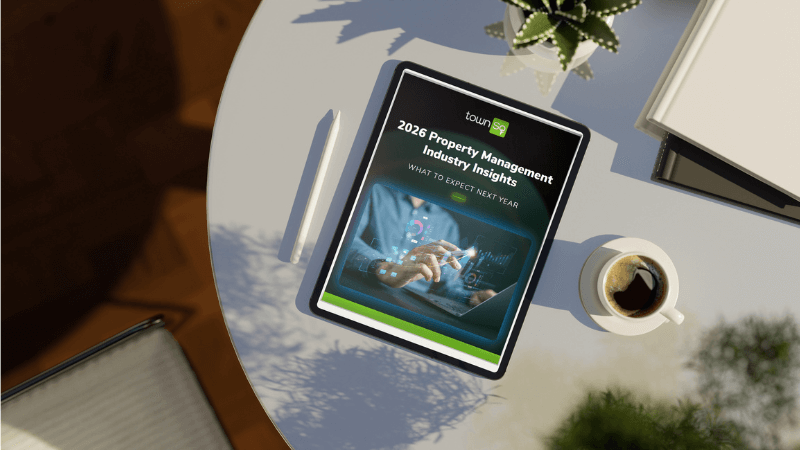
To better understand what’s ahead, TownSq conducted a nationwide industry survey in September 2025, gathering insights from community managers, management company leaders, and board members. The findings are compiled in our latest eBook: 2026 Property Management Industry Insights: What to Expect Next Year.
Below is a concise overview of the key trends shaping the industry—and why these insights matter as you plan for the year ahead.
Top HOA & Property Management Trends for 2026
Survey responses reveal a clear shift toward long-term operational strength. Across roles, industry leaders are focused on:
- Managing rising costs tied to insurance, inflation, and vendors
- Keeping pace with evolving regulatory and legislative requirements
- Delivering faster, more consistent homeowner communication
- Reducing manual workloads through technology and automation
These challenges are closely connected. Organizations that streamline operations and improve visibility are better positioned to control costs, stay compliant, and deliver better service.

Technology Adoption and the Role of AI
Technology is now a baseline expectation in community management.
- 89% of community managers and 75% of boards report using HOA software
- The most requested tools for 2026 include violation management, architectural review workflows, and reporting dashboards
One of the most impactful findings: 20% of community managers spend a significant portion of their day responding to homeowner inquiries. Communication remains the most time-consuming task—making it the largest opportunity for automation.
AI-powered tools, such as Suggested Reply, help teams surface relevant information and draft customizable responses, reducing manual effort while maintaining a personal experience.
What Industry Leaders Are Prioritizing
Despite differing responsibilities, community managers and board members are aligned on three core priorities for 2026:
- Improving client and homeowner retention
- Enhancing customer service and response times
- Increasing homeowner engagement and transparency
Better service supports engagement, which strengthens trust and satisfaction. Technology and automation play a central role in enabling all three.

Executive Actions for a Stronger 2026
Beyond identifying challenges, the survey outlines how forward-looking leaders are responding. The eBook includes practical guidance to help organizations:
- Control rising costs through forecasting and real-time financial visibility
- Navigate regulatory changes with centralized documentation and reporting
- Reduce workloads and burnout through automated workflows
- Address turnover with systems that support consistency and scalability
Board-specific insights also highlight ways to strengthen governance and collaboration.
Download the 2026 Industry Insights eBook
Although this blog provides a high-level summary of the findings, the full eBook goes deeper with data, benchmarks, and actionable strategies.
Inside 2026 Property Management Industry Insights: What to Expect Next Year, you’ll uncover:
- Exclusive survey data from hundreds of industry professionals
- Top 2026 priorities and what they mean for your communities
- Executive actions to tackle costs, compliance, workloads, and turnover
- Board-focused insights for stronger governance and collaboration